Types Of Ale

Ale is one of the two major common beer styles. Known as top-fermented beers, the yeast strains continue to work at the top of the fermentation tank. Ale usually requires warmer temperatures, ranging from 13 to 21°C and has a shorter fermentation timeline.

Ale offers a fruity and spicy flavour due to the formation of esters and phenols that are created through quicker fermentation at warmer temperatures. They can be light or dark in colour that ranges from red, copper, orange and brown in appearance. The Alcohol By Volume (ABV) of ales ranges from 4-11 percent and an IBU (International Bitterness Units) varies between 8-100.

Types Of Ales

1. Pale Ale

Pale ale is a generic term that includes popular ale styles distinguished by their golden to amber colour, hop-forward and bitterness characteristics. The original pale ale is the British pale ale (English-style pale ale) that was first developed in England in the 18th century.

Throughout history, innovations in the brewing process gave rise to the popularity of pale ale through flavour development that evolved over time. Some notable pale ale styles are American pale ale, Indian pale ale, Belgian session ale and Bière de Garde.

2. Amber Ale

Amber ales are known for their malt sweetness and caramel flavour tends to be sweeter compared to other pale ales. The colour ranges from amber to red tones derived from the roasting of malt and caramels.

Today, the most popular styles of amber ales are American amber and Irish red ale. Although both of them share similar characteristics, the emphasis on the use of caramel and malt during the brewing process differentiates these two styles. In general, the American amber flavour profile has a high hop bitterness and aroma compared to the Irish red ale which is very low in hop flavour and aroma.

3. India Pale Ale

Indian pale ales are known for their bitter taste due to the additional use of hops during the brewing process. Due to its frequent export from England to India during the 18th and 19th centuries, the extra hops were used to preserve the beer for a longer time due to the extended travel periods.

IPA’s ABV (Alcohol By Volume) ranges from 5-10.5 percent and the IBU (International Bitterness Units) varies between 40-100. They are slightly darker in colour that can range from gold to copper or red/brown.

What Is A Lager?

Lager is a widely favoured style of beer and one of the two main beer types. The term “lager” originates from the German word “lagern,” meaning to store.

Lagers are bottom-fermented beers, with the yeast settling at the bottom of the wort during fermentation and thriving under colder temperatures.

The cool conditioning process during fermentation creates a subtle, smooth, and light-flavoured beer characteristic of lagers.

Lagers typically have an Alcohol By Volume (ABV) ranging from 4% to 13% and vary in International Bitterness Units (IBU) from five to 45.

Types Of Lager

The lager brewing method creates several different beer styles — ranging from pale to amber, dark, and bock.

1. Pale Lager

Pale lager is a light-to-golden-coloured beer style that originated in the mid-19th century at Spaten Brewery in Germany. The most popular and common type of pale lager is the pilsner.

Pilsners are recognizable by their light straw to golden colour and balanced flavour profile. They are crisp and known for their delicate hints of bitterness.

2. Amber Lager

Amber lagers are medium-bodied beers bursting with flavour. They exhibit toasty, malty, and slight caramel aromas.

One notable amber lager style is Marzen, originating from Bavaria. Traditionally brewed in March, aged through spring and summer, and served during Oktoberfest in September, Marzen offers a clean flavour profile with a deep malty richness.

3. Dark Lager

Despite their rich shade, dark lagers should not be grouped under dark beers. They are as easy to consume as their lighter counterparts, but what sets them apart is their enriching aroma and taste.
Think of rich and roasty flavours like coffee, cocoa, and chocolate. Dark lagers provide a clean and crisp experience while delivering a complex flavour profile. Munich Dunkel and Schwarzbier are two popular styles to explore.

4. Bock

Bock holds a long history in German culture, with Bavarian monks consuming it during celebrations. Bock beers are malt-forward and light on hops, featuring a smooth mouthfeel and lower carbonation. With an ABV ranging from six to seven percent, bocks are stronger compared to classic lagers.

The Art Of Beer Tasting

Appreciating beer goes beyond simply drinking it. To truly savour the experience, it’s important to engage your senses and explore the various elements that contribute to its taste.

Here’s a step-by-step guide on how to taste beer like a connoisseur:

1.Aromatics

The aroma of beer sets the stage for your taste buds. Swirl the beer gently in your glass to release its scents. Different beer styles offer a range of aromas, from fruity and toffee-like to grassy, chocolatey, or citrusy. Take a moment to inhale and explore the complex aromatics.

2.Flavour

Flavour and aroma are intertwined, so your sense of taste works in harmony with your sense of smell. With a heightened awareness of the beer’s aromas, take a sip and let it linger on your tongue. Pay attention to the different flavours you perceive. Developing a beer vocabulary will help you articulate and appreciate the nuances of taste.

3. Mouthfeel

Mouthfeel refers to the texture and sensation of beer in your mouth. Factors like carbonation, alcohol content, serving temperature, and beer style all contribute to the mouthfeel. Notice the body and viscosity of the beer, as well as its carbonation levels. These aspects add to the overall drinking experience.

In summary, here’s your beer tasting checklist:

  • Observe: Take note of the beer’s appearance, including foam, colour, and clarity.
  • Aromatics: Swirl the beer gently to release its aroma, and take time to appreciate the range of scents.
  • Taste: Sip the beer and hold it in your mouth to explore the flavours. Identify the primary tastes—bitterness, sourness, saltiness, sweetness, and umami.
  • Mouthfeel: Pay attention to the texture, carbonation, and overall sensation in your mouth.

By following these steps, you can elevate your beer tasting experience and gain a deeper understanding of the beer’s qualities. Cheers to enjoying beer with all your senses!

Ale vs. Lager understanding the basics

When it comes to beer, two primary types steal the spotlight: Ale and Lager. These categories are defined by the yeast used during fermentation, which influences the beer’s characteristics and flavours.

Yeast, a microscopic organism, plays a crucial role in the fermentation process. It consumes sugar from the wort, transforming it into alcohol, carbon dioxide, and other compounds like esters and phenols.

The brewing world recognises two distinct yeast species: ale yeast (Saccharomyces cerevisiae) and lager yeast (Saccharomyces pastorianus).

Distinguishing between ale yeast and lager yeast involves considering several factors:

  • Yeast Species: Saccharomyces cerevisiae is used for brewing ales, while Saccharomyces pastorianus is employed for crafting lagers.
  • Fermentation Temperature: Ales ferment at higher temperatures, typically between 60–75 ºF (15-24 °C), while lagers prefer cooler temperatures, around 42-55 ºF
    (5-13 °C).
  • Fermentation Location: Ale yeast conducts fermentation on top of the beer in a fermentation tank (top-fermenting yeast), whereas lager yeast settles at the bottom (bottom-fermenting yeast).

These distinctions greatly impact the flavour profiles of ale and lager:

Ales, thanks to their warmer fermentation temperatures, produce fruity and spicy compounds like mango, pineapple, banana, clove, and vanilla. This array of flavours adds complexity to ales.

Conversely, lagers, fermented at cooler temperatures, offer a clean and crisp taste. With fewer aromatic compounds, the malt and hops take centre stage, allowing their characters to shine.

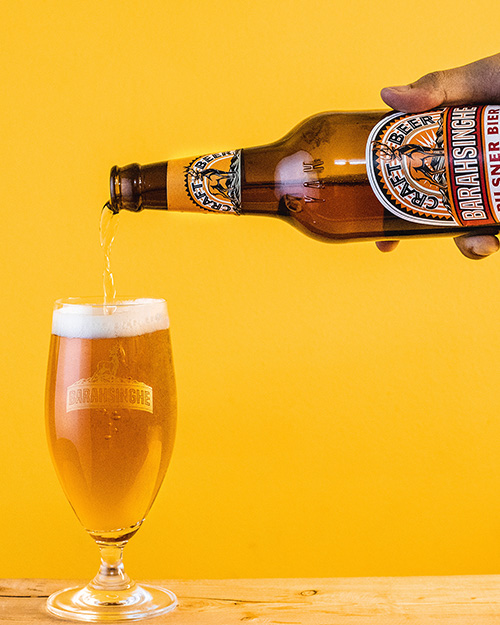
Let’s consider two notable Barahsinghe beers to illustrate these differences: Barahsinghe Pilsner Bier, a refreshing lager that showcases the malt and hops with its clean and crisp profile, and Barahsinghe Hazy IPA, an ale that entices with juicy and fruity flavours, achieved through a meticulous interplay of yeast, fermentation, and carefully selected hops.

Understanding the contrast between ale and lager opens up a world of flavours and appreciation for the diverse beer styles available.